How do MAS Mystery Shops & Assessments improve dealership sales performance and client experience?
Table of Contents

Modern Auto Solutions Mystery Shops & Assessments give you a reality check on how your store actually handles opportunities in Sales and Service phone, digital, in-store, and handoffs between departments. We measure communication quality, process execution, and tool usage against the experience you think you’re delivering, then document the gaps with clear scoring and coaching-ready findings.
The output is not “gotcha reporting.” It’s an action plan tied to managed accountability across people, process, and technology , supported by discovery, process mapping, and optimization . If your calls are landing on dead numbers or bouncing through bad routing, we flag it and fix it as part of the assessment work. If your team’s CRM/SaaS adoption and utilization is inconsistent, we quantify it and build a practical path to improvement.
How do we Ghost Shop a Car Dealer?
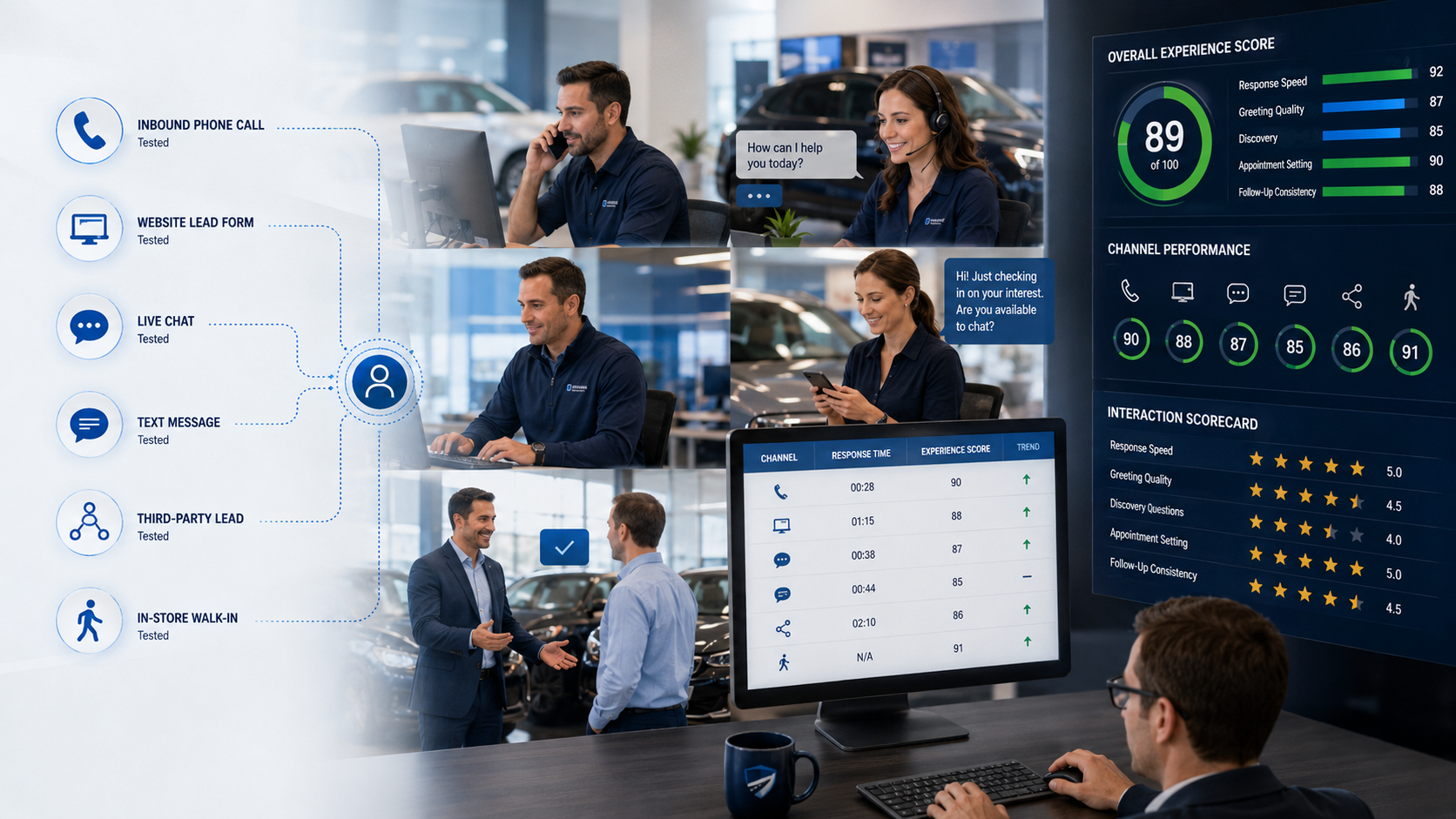
A MAS shop is built to feel like a real customer interaction, not a classroom exercise. We run test scenarios across the same channels your customers use: inbound calls, web forms, chat, text, third-party leads, and walk-ins. Each scenario is designed to test one thing at a time: speed to answer, quality of greeting, discovery questions, appointment control, confirmation habits, and the “next step” language that keeps momentum. You’ll see where the process breaks under normal conditions: the phone rings into a loop, a rep treats a lead like a nuisance, a manager desk-pivot turns into a dead end, or a showroom visit ends with a handshake and no follow-up plan. That’s not moral failure; that’s process reality. The assessment captures the interaction as evidence—timestamps, contact attempts, outcomes—so the conversation stays grounded in what happened, not what someone remembers. A dealership’s biggest blind spot tends to be consistency, and mystery shops are one of the cleanest ways to measure consistency without asking the team to self-report.
The output is structured so it can be used by operators, not just filed away by leadership. Each interaction is scored against defined standards: accessibility, professionalism, product knowledge, discovery depth, appointment setting, transition language, and follow-up execution. The “score” matters less than the pattern behind it. A store can ace friendliness and still leak profit through weak appointment control. A store can sound sharp and still fail because the CRM never reflects the outcome. We capture both: what the customer heard and what the system shows. The assessment separates skill gaps from workflow gaps, because those require different fixes. A rep who can’t explain next steps needs coaching; a rep who can’t find the next step in the tool needs a better workflow. We present results in a way that supports trend analysis across roles, rooftops, lead sources, and times of day, so you can spot systemic issues instead of blaming whoever picked up the phone at 3:47 p.m.
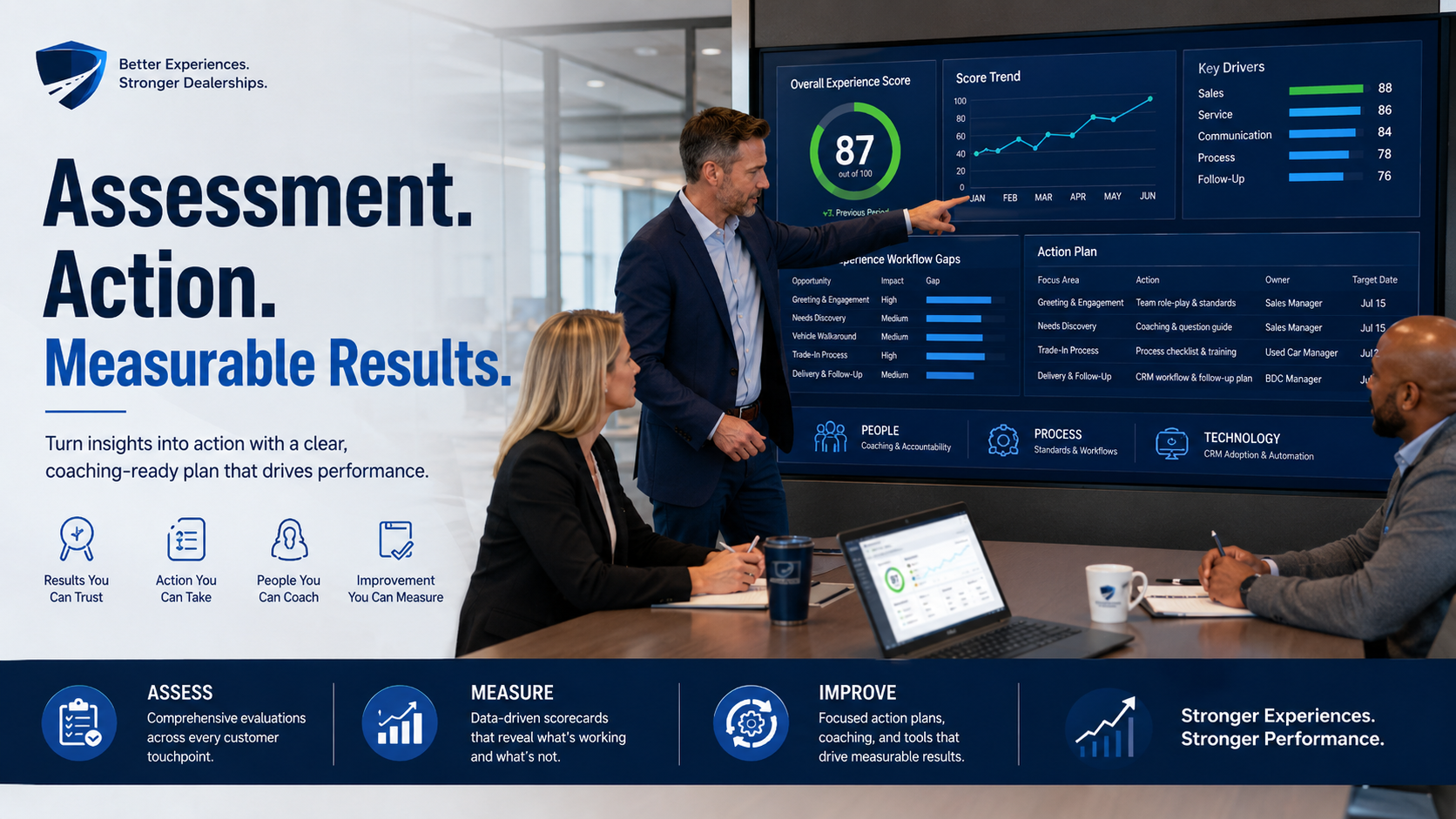
Assessments get teeth when they connect to root causes you can actually change. MAS uses the findings to trace breakdowns to three buckets: people, process, and technology. People issues show up as missed habits—no discovery, weak asks, sloppy confirmations, vague follow-up. Process issues show up as missing handoffs, undefined responsibilities, and “everyone thought someone else did that.” Technology issues show up as routing problems, dead numbers, duplicated forms, mismatched lead sources, and CRM steps that are either absent or too painful to follow. Once those buckets are clear, fixes become practical. You may need better call routing, tighter lead ownership rules, CRM task templates, or a clean appointment confirmation cadence. You may need role clarity or pay-plan alignment that stops rewarding busywork and starts rewarding outcomes. The point is to move from “we need to do better” to “here are the two friction points that create 80% of the misses.”
Ghost Shopping For Automotive Service
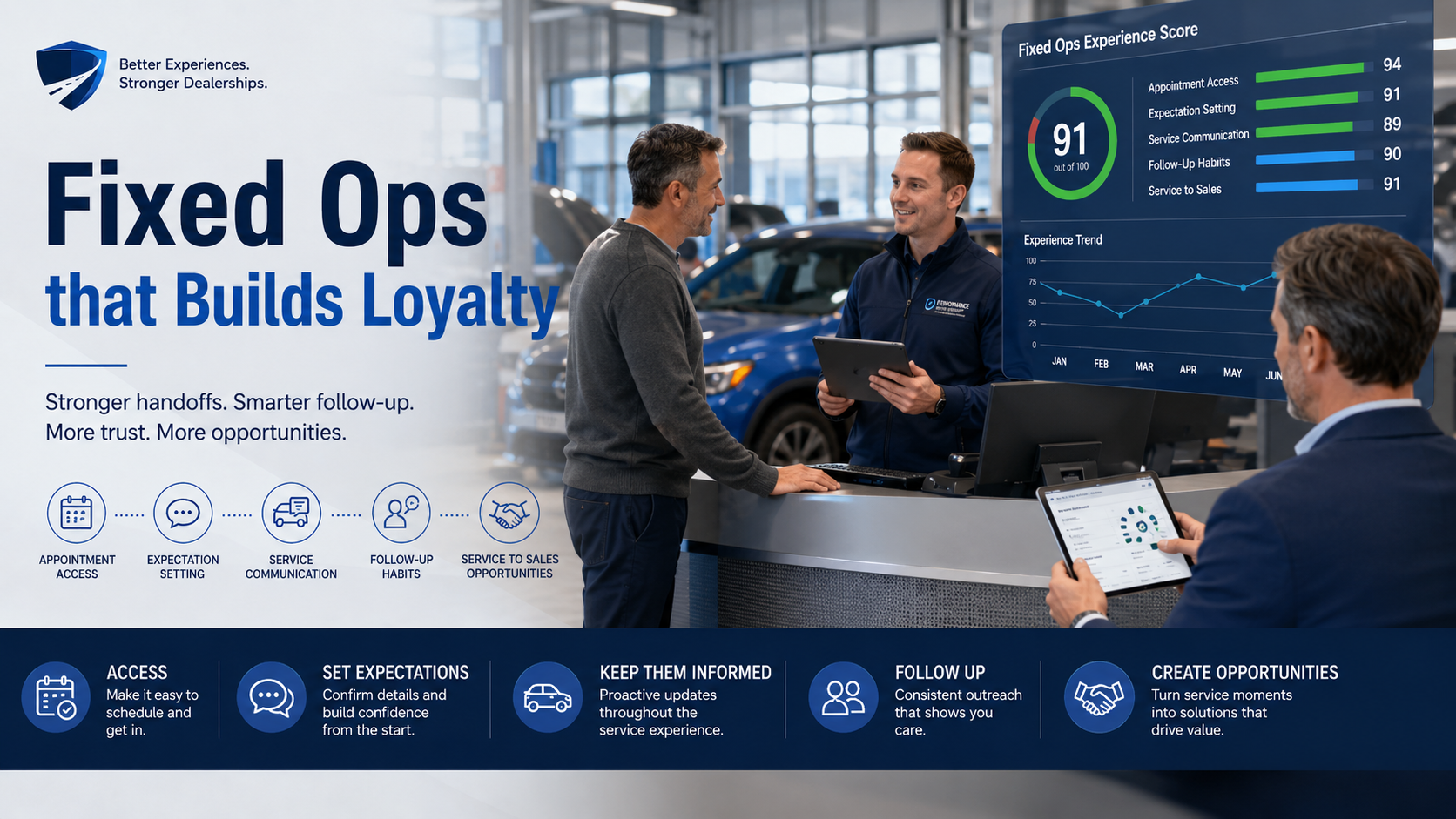
Fixed Ops shops tend to expose a different set of leaks, often with bigger long-term consequences. Service customers don’t just buy an oil change; they buy a relationship with your store’s competence. The assessment looks at appointment access, language around estimates, communication on delays, the write-up experience, and how well advisors set expectations. It tests whether multi-point inspection recommendations are explained in a way a normal human can understand, and whether declined work gets captured for future follow-up instead of disappearing into the ether. It looks at retention habits: next appointment scheduling, recall/warranty education, and simple “what happens next” clarity. It can include Service-to-Sales opportunity handling, since a service drive is where trade opportunities and acquisition conversations begin—quietly, politely, and without turning the guest into prey. A strong service experience builds return visits and repair orders; a sloppy one creates a customer who learns your competitor’s waiting room furniture by name.
The work matters most after the results land. MAS uses the assessment as fuel for targeted coaching using a “train → show → coach” approach, tied to role-appropriate expectations. That means short, repeatable coaching loops: call reviews with two corrective points, quick scripts that sound like humans, and manager check-ins that focus on outcomes. It’s not a week of hype followed by silence. We set a cadence: daily micro-coaching, weekly scorecard reviews, and a defined set of metrics that match the job—appointments set, show rate, sold rate, response time, service retention behaviors, and follow-up compliance. When a breakdown is process-based, we fix the process and retrain the team on the new standard. When it’s skill-based, we coach the behavior and verify it in the next round of shops. Coaching is easier when the “why” is visible. Shops provide that visibility, so the team doesn’t feel lectured; they feel guided.
Mystery shops can turn toxic when they’re treated like surveillance. MAS avoids that trap by framing them as measurement and improvement, not punishment. The goal is not to “catch” people; it’s to eliminate avoidable friction that makes good employees look bad. A fair program uses consistent scenarios, transparent standards, and clear expectations for leaders: no public shaming, no scoreboard theatrics, no gotcha culture. Leadership gets trained on how to use results: focus on patterns, coach privately, fix systems, then validate improvement with a re-check. We can run single-point assessments for a fast diagnostic, or set a monthly cadence that tracks progress across rooftops and departments. Over time, the work creates a shared language: what “good” sounds like on the phone, what a clean handoff looks like, what the CRM should show, what the guest should feel. That kind of alignment is rare in retail. It’s one of the few advantages that competitors can’t copy by buying another tool.
Schedule Mystery Shops & Assessments
Schedule Discovery CallLearn More About Mystery Shops & Assessments
Frequently Asked Questions
Find out more about how Modern Automotive Solutions can help you with Mystery Shops & Assessments
We evaluate the full customer journey: lead response quality, phone handling, appointment setting, showroom experience, service scheduling, write-up communication, and follow-up. The goal is to reveal where the guest experience breaks—then connect that breakdown to a fixable process.
Both. MAS is built to improve Fixed and Variable operations through consistent opportunity management and process execution, so the assessment can cover Sales only, Service only, or a combined path that tests inter-department handoffs.
Yes. Phone execution is a frequent profit leak, so we assess call handling, routing, and outcome quality. We can audit caller experience and identify inactive numbers that create friction or missed opportunities
Yes. We assess SaaS/skills proficiency across adoption, confidence, and utilization, then tie the findings to coaching and workflow updates that improve consistency.
You get clear findings that translate into operational changes: what happened, where it happened, why it happened, and what to do next. When process mapping is part of the engagement, the work can be anchored to an optimized process map designed to drive consistent execution
MAS is rooted in retail automotive operations and performance coaching, with leadership experience across dealership roles and OEM initiative work. The point is practical evaluation by people who understand how the work gets done, not by someone reading a script off a clipboard.
Traditional programs stop at a score. MAS uses the assessment as the start of an improvement cycle: discovery, root cause, process design, and coaching reinforcement. You’re paying for better execution, not a report that sits in someone’s inbox.
We can move straight into targeted coaching and leadership development using the “train, show, coach” model. That keeps the findings from turning into a one-week spike in performance followed by a quiet return to normal.
Yes. MAS supports BDC/Internet team installation, rehab, or centralization, with KPI-driven insights to improve conversion. The assessment can diagnose gaps in scripting discipline, lead handling, follow-up timing, and handoffs to the floor or drive.
We tie findings to measurable behaviors and repeatable checkpoints: call outcomes, appointment set rate, show rate, close rate, service retention behaviors, and consistency of process execution. MAS’s approach is built around managed accountability and measurable solutions, so progress stays visible and coachable